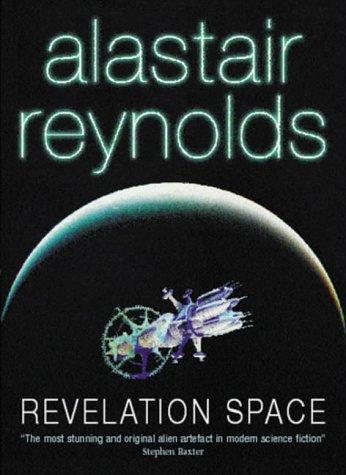
Reynolds worked as an actual astrophysicist before writing full time and it shows in the best way, the physics here isn’t decorative, the ships accelerate at rates that would kill an unprotected crew, the distances are treated as genuinely punishing rather than a montage away, and there’s a real coldness to how the universe is presented, indifferent rather than hostile. The three plotlines, Dan Sylveste obsessing over the extinct Amarantin on Resurgam, the crew of the Nostalgia for Infinity dealing with a captain slowly fusing with a plague-like machine intelligence, and Ana Khouri working as a hired killer with a leash she doesn’t fully understand, take a long time to intersect, and I know that patience-testing structure is what loses some readers.
It didn’t lose me, mostly because the Amarantin mystery itself is genuinely unsettling once it resolves, an entire species wiping itself out at the exact threshold of achieving spaceflight, and the implication of why is the kind of cosmic-horror-adjacent idea that recontextualizes everything that came before it. The Melding Plague turning the Nostalgia for Infinity into something between a ship and an organism, with Volyova wandering corridors that are subtly rearranging themselves, gave me the specific flavor of dread I go looking for in a book, less jump-scare, more slow architectural wrongness.
Where it stumbles is Khouri’s chapters early on, which read thinner than the other two threads, more plot-function than person, and the ending resolves with a bit more convenient convergence than the patient buildup earned. Four stars, not five, but it’s the kind of four that’s made me chase down the rest of the Revelation Space books anyway, which says more than the number does.